



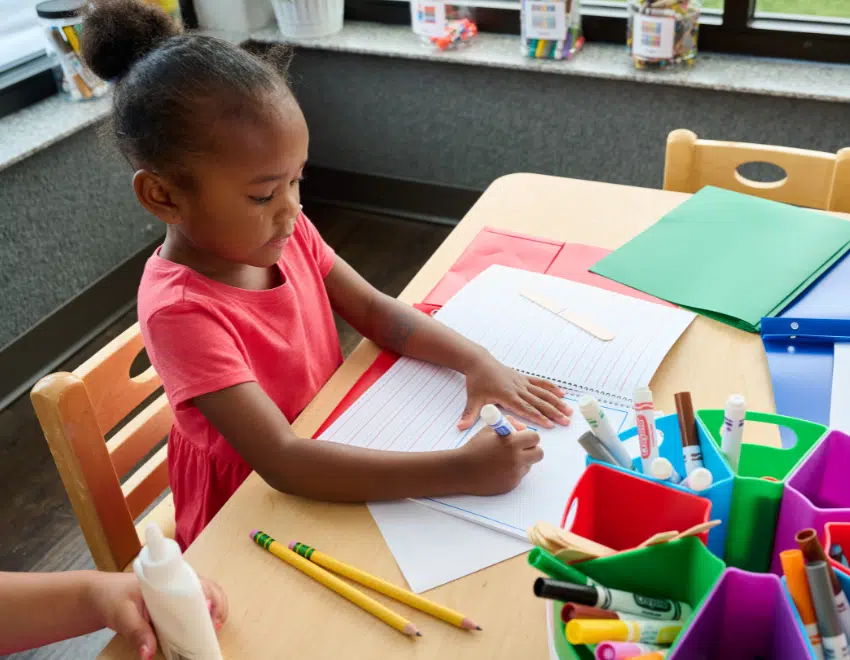
During periods of life with big transitions, such as back-to-school season or after a move, the disruption of a typical day can be stressful for the whole family. Too many changes and new decisions at once can feel overwhelming and tiring. Adjusting to a new environment or schedule can be challenging, but establishing a regular daily routine helps ease the change and make the transition much smoother
Why Routines Matter
Predictable routines are one of the best ways to help kids feel safe and confident moving through their day. When children know what to expect next, they do not have to worry about figuring out their next step and can instead focus on learning and interacting with those around them. As children start to understand their schedule, they build essential social and cognitive skills including patience, self-control, independence, and confidence.
Routines are not made to be a strict schedule to adhere to, or to ensure no mistakes are made throughout the day, but to support your household with predictability, structure, and a shared sense of purpose. Simple, consistent habits can make mornings, evenings, and transitions feel calmer and more manageable for parents and children.
Keep Your Routine Simple
Your daily routine does not have to make your family the most productive or organized; it serves to make everyday decisions and tasks easier and more enjoyable for everyone.
Start with small, consistent habits that can be built over time. Try to wake up and go to sleep at the same time each day or eat dinner around the same time every evening. You can also teach your children about designated places for their items to make cleanup easier, such as a specific bin for their shoes when they come inside or where their toys go at the end of the day.
When you have reliable routines and processes to fall back on, you have guidance when the day starts to lose control.
Build Schedules Slowly
Introducing too many new routines at once can be overwhelming for everyone. Instead, allow yourself and your child enough time to adapt to new changes and become comfortable with each habit before introducing another.
If you are preparing for back-to-school, practice your morning routine before the first day arrives. Start waking your child at the time they will need to be up, practice getting dressed for the day, eating breakfast, and packing their bag. Your child will be familiar with the morning flow by the time the first day arrives, helping your days start off with more ease.
Adapt to Your Child’s Needs
Each child is different, so it is important to understand what steps in a routine may be easier for your child and which will require a little more effort. Notice their strengths and construct a routine around their individual needs.
Keep expectations age-appropriate, and as they grow, gradually give them more responsibility in their daily routine. A younger child can begin with knowing what time to get dressed in the morning, and over time, they can learn how to put clothes on by themselves and eventually pick out their own outfits.
Adapting to your child’s needs and building a routine as they grow gives them opportunities to build confidence and independence.
Being Flexible and Patient
Life can be unpredictable, and your days may not always go as planned; that is okay. Routines are not there for perfection; they are to give your family something to rely on. When your child needs extra time or you are away from home, provide them with extra security and stability, and help them understand what is happening and what comes next.
Keep your response to the situation calm, offer simple explanations of what is different to your child, and focus on what you can keep consistent from your routine, such as a greeting or bedtime ritual.
Establishing a regular routine can make a big difference in times of change. By keeping it simple, adding new habits gradually, meeting your child where they are, and staying flexible, you can create a sense of stability that makes your children feel safe, motivated, and confident as they grow.